

Cryptophia Research publishes independent, evidence-led digital-asset research for journalists, analysts and serious readers. This page collects reusable research frameworks, original visuals and methodology references that can be cited in reporting.
Editorial contact: use the Contact page for research questions, correction requests or source enquiries. Cryptophia does not sell conclusions or require positive coverage in exchange for access to its research.
Fast citation guide
- On-chain claims: use the On-Chain Metric Definition Framework to document the metric definition, entity set, transformation, time boundary and inference before citing a chart as evidence.
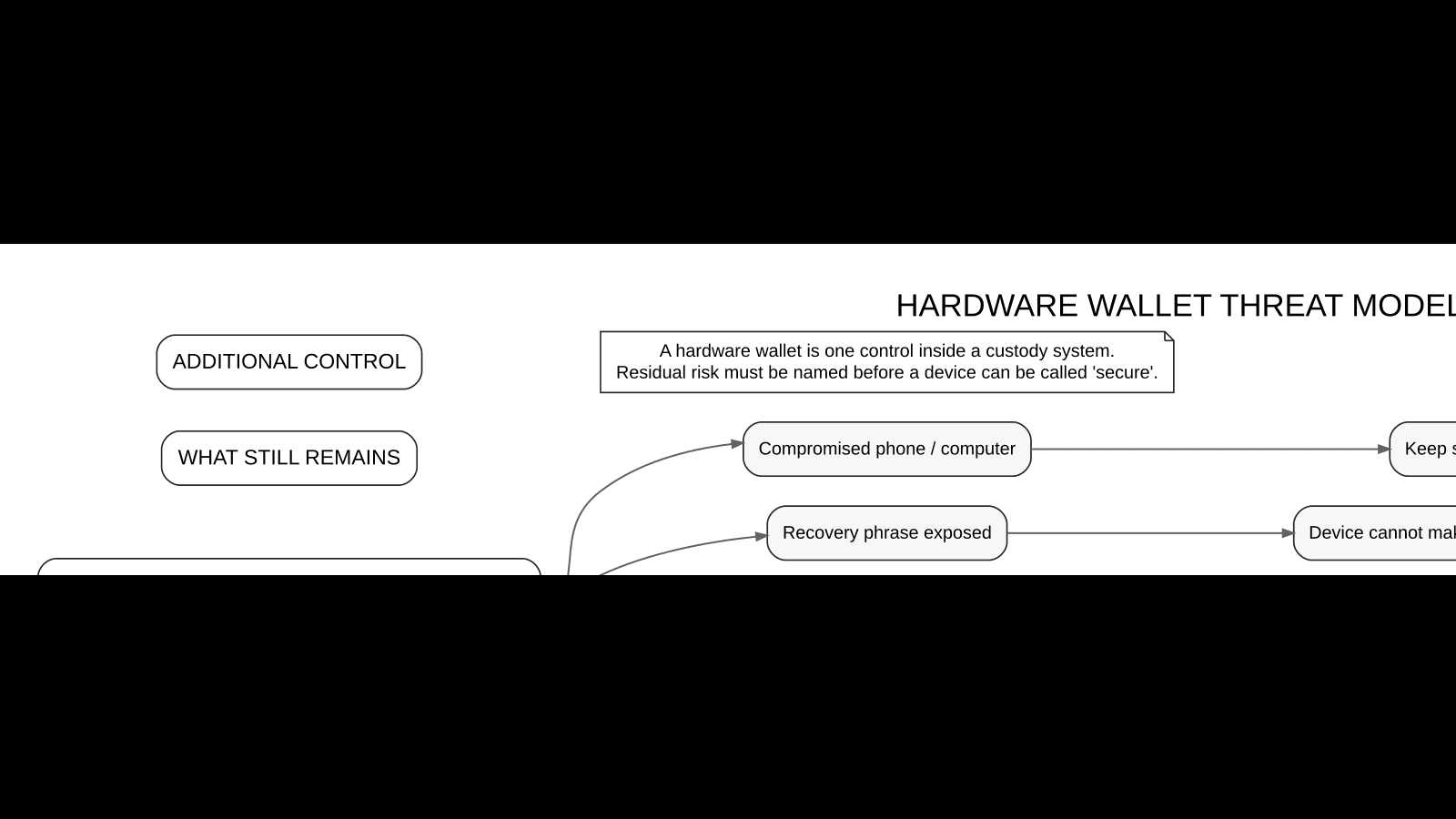
- Hardware-wallet security: use the Hardware Wallet Threat Model Matrix to separate the failure a device can reduce from seed compromise, malicious approvals, recovery failure and other residual risks.
- Exchange-cost comparisons: use the Crypto Exchange Total Cost Checklist to compare the complete route from funding through execution and withdrawal rather than one advertised fee.
- Crypto tax and portfolio records: use the Crypto Tax Record Audit Template to test whether the underlying ledger is complete before relying on software output.
- Portfolio and counterparty risk: use the Crypto Risk Assessment Worksheet to map dependencies, failure modes, position size, leverage and exit routes before treating conviction as a risk limit.
For a simple attribution, cite Cryptophia Research and link to the specific framework used. When a framework materially informs a quotation or chart, preserve the relevant limitation or uncertainty rather than quoting the conclusion alone.
Reusable research frameworks
On-Chain Metric Definition Framework
A minimum audit unit for blockchain analytics: metric definition, address or entity set, transformation, time boundary, valuation source and revision policy.
Hardware Wallet Threat Model Matrix
Maps malware, phishing, seed theft, device theft, malicious approvals, recovery failure and lifecycle risk to prevention, residual risk and response.
Crypto Exchange Total Cost Checklist
Compares the complete route from funding and FX through spread, execution, withdrawal, settlement and records rather than relying on a single advertised trading fee.
Crypto Tax Record Audit Template
Checks account completeness, transfer matching, acquisition history, classifications, valuations, manual edits and source evidence before software output is trusted.
Crypto Risk Assessment Worksheet
Separates thesis conviction from position size, leverage, liquidity, counterparty, custody, protocol, stablecoin, governance and exit-route risk.
How We Research
The evidence standard behind the frameworks: primary sources first, explicit evidence boundaries, failure modes before rankings and conclusions that change when the evidence changes.
Original visuals
These Cryptophia Research visuals may be referenced in reporting with clear attribution and a link to the relevant research page. Please do not alter them in a way that changes the meaning of the underlying framework.

Citation and reuse
- Attribute the work to Cryptophia Research and, where relevant, Sophia Lopez.
- Link to the original framework or methodology page rather than only to an image file.
- Quote or summarize the research accurately and preserve material limitations or uncertainty.
- Reuse does not imply that Cryptophia Research endorses the publication, product, protocol or conclusion in which the material appears.
- For substantial reproduction, commercial syndication or modified graphics, request permission through the Contact page.
About Sophia Lopez
Sophia Lopez is the Lead Researcher at Cryptophia Research. Her work focuses on self-custody and security, market structure and on-chain risk, and platforms and research tools. The research standard emphasizes primary evidence, explicit assumptions, failure modes and decision quality.
For publication background, see About Cryptophia Research. For the complete working index, browse Research Notes.