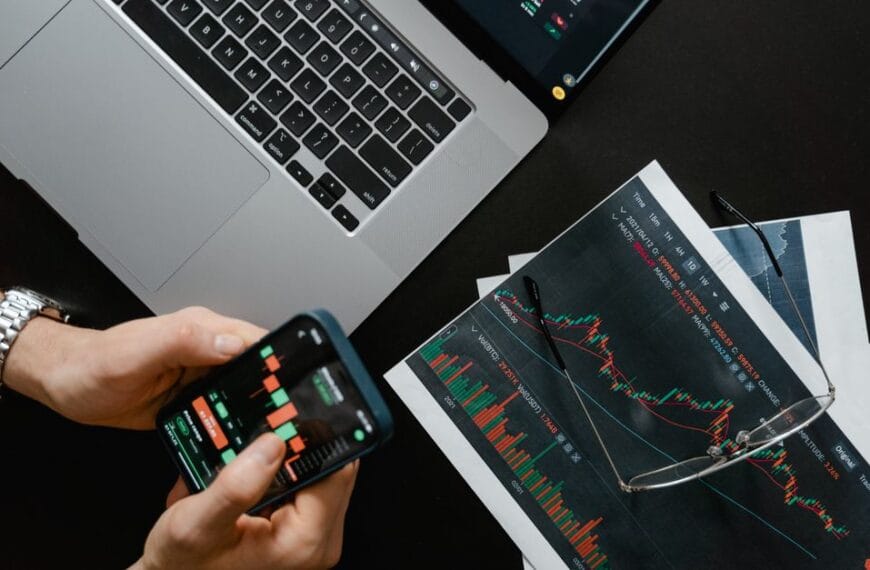



Before choosing a crypto portfolio tracker, decide how much of your financial life the tracker needs to see.
A manual watchlist can answer “What are these holdings worth?” without receiving an exchange API key. A public-address tool can reconstruct DeFi positions without knowing your exchange history. A tax-ledger product may need years of trades, deposits, withdrawals and wallet activity to answer a much harder question.
The best tracker is therefore not the product with the longest integration list. It is the least revealing data model that can still prove the number you care about.
Evidence boundary: this comparison is based on current official product and help documentation. Cryptophia Research does not claim hands-on testing of every paid plan, mobile app, API integration or support team.
Commercial disclosure: This article contains no merchant affiliate CTA. Official vendor links below are evidence citations only.
Choose the job before the product
| Job | Minimum useful data | What the number can reasonably mean |
|---|---|---|
| Market watchlist | Manual holdings and prices | Approximate current value and allocation |
| Self-custody / DeFi view | Public addresses or wallet connections | Observable on-chain balances and protocol positions |
| Performance ledger | Exchange history + wallets + transfers | More complete P&L and acquisition history |
| Tax / audit record | Continuous multi-year transaction evidence | Traceable cost basis, disposals and report inputs |
If you only need the first job, granting the permissions required for the fourth is unnecessary exposure.
CoinGecko Portfolio: the low-permission choice
CoinGecko Portfolio makes the most sense when the portfolio is primarily a market view. Manually entered holdings can be organised without giving a tracker exchange credentials or a complete wallet graph.
That is a privacy advantage and a record-keeping limit.
CoinGecko currently states that portfolio transactions created on its website or mobile app cannot be downloaded or exported. I would therefore treat the feature as a convenient view, not as the only durable record of how the holdings were acquired.
Use it when: you want prices, allocation and a simple manually maintained view while source records live somewhere else.
DeBank: the on-chain position viewer
DeBank is solving a different problem. Its current data model can return balances and protocol positions across supported chains from a user address. That makes it much more natural for an EVM wallet containing lending positions, LPs, debt and other contract-based assets that a manual coin list would flatten.
The trade-off is financial graph visibility. A public address cannot spend, but it reveals activity that can be associated with the same address indefinitely. Connecting several addresses to one service can make portfolio relationships easier to infer.
DeBank also cannot manufacture exchange-internal purchase history from public chain data. A wallet can show where an asset is now without proving what it cost before it arrived.
Use it when: current EVM and DeFi position visibility is the job and full accounting history is not.
Koinly: when the dashboard must become a ledger
Koinly is stronger when the number on screen needs an audit trail behind it. Its dashboard is built from imported transactions and can separate flows such as deposits, withdrawals, income, expenses and trading fees over a selected period.
That additional accounting depth requires more data. Exchanges, wallets and DeFi activity have to be imported and reconciled; missing history remains a source problem even when the dashboard is polished.
I would choose Koinly over a simple portfolio app when the real question is no longer “What is this worth?” but “Which records explain how this balance and cost basis got here?”
Use it when: portfolio tracking is part of a multi-wallet reconstruction or tax workflow.
CoinTracker: strongest fit when the portfolio and US tax workflow should stay close
CoinTracker sits in the same broad ledger category but is especially relevant to a US-centred workflow. It can connect exchanges, wallets and custodians through automatic sync, public addresses or custom files, so the current portfolio can feed into a more complete transaction record.
The same caveat applies: a connected account is not proof of complete history. Unsupported products or missing periods still have to be supplied another way.
Use it when: US portfolio monitoring and tax records are intended to live in one system and its supported integrations cover the accounts you actually use.
CoinTracking: choose depth only when you will use it
CoinTracking currently offers portfolio tracking across a large integration and report set, with plan limits and features that expand as transaction volume grows.
That is useful for a long-lived or high-volume record. It also means the user has more configuration to understand. An advanced report is not better evidence if the underlying imports or settings are wrong.
Use it when: deep history, many records and granular reporting are worth more to you than a minimal interface.
The privacy budget is part of the subscription cost
Two products with the same dollar price can have very different information costs.
| Connection | What the tracker learns | What it still cannot do by itself |
|---|---|---|
| Manual holdings | Only what you enter | Prove the hidden transaction history |
| Public address | On-chain balances and activity for that address | Spend funds or see off-chain exchange trades |
| xpub / extended public key | A broader derived wallet graph | Sign transactions |
| Read-only exchange API | Potentially detailed balances and account history | Trade or withdraw when permissions are correctly restricted |
| CSV | The financial history contained in the file | Continue syncing after the export |
Give a tracker only the source it needs for its job. “Read-only” protects against spending authority; it does not make financial history non-sensitive.
Three acceptance tests matter more than feature count
Traceability: Can you reach the transaction or source behind an important calculated number?
Portability: Can you keep the records needed if the service, subscription or import method changes?
Uncertainty: Does the product reveal missing history and unsupported records, or does a clean total hide them?
The first two are especially important because a tracker should make your records more durable, not make the service itself a new single point of failure.
Where I would start
For a manual allocation view, I would start with CoinGecko Portfolio. For EVM and DeFi visibility, DeBank is the more natural tool. For a transaction-led tax record, I would compare Koinly and CoinTracker around the exact accounts and jurisdiction involved. For a long or high-volume history, CoinTracking deserves a look if its extra controls will actually be used.
The decision should get narrower as the data gets more sensitive. Do not connect every exchange and wallet merely because the button exists.
For the evidence problem behind tracker totals, read What Portfolio Trackers Know, Guess and Miss. Before connecting an exchange, use the read-only API key security checklist.