

A Bitcoin-only hardware wallet is not automatically safer because it supports fewer coins. It can be safer when the removed code, parsers and signing flows are functions the owner would never use. A multi-coin hardware wallet is not automatically reckless because it supports more assets. It can be safer than improvising several poorly understood wallets and recovery systems.
Affiliate disclosure: This article contains tracked BitBox and Ledger links. Cryptophia Research may earn a commission from a qualifying purchase at no extra cost to you. Commercial relationships do not determine the conclusion. Read the Affiliate Disclosure and How We Research.
My judgment: choose Bitcoin-only firmware when the signer has one long-term job: protect Bitcoin. Choose multi-coin firmware when several assets genuinely belong in the custody plan and you can keep dApp activity away from the seed protecting savings.
Bitcoin-only vs multi-coin hardware wallet: quick answer
| Question | Bitcoin-only wallet | Multi-coin wallet |
|---|---|---|
| Active code and parsers | Narrower Bitcoin-focused surface | More chains, address formats and transaction parsers |
| Best use | Long-term Bitcoin savings | Hardware-backed custody for several assets |
| Main advantage | The device can refuse unrelated signing jobs | One maintained setup can reduce wallet fragmentation |
| Main risk | False confidence that fewer features means no vulnerabilities | One seed may become exposed to more applications and contract interactions |
| Recovery | Usually standard Bitcoin-compatible backup options | May cover several networks through one backup |
| Who should choose it? | A committed Bitcoin-only holder | A holder with a real multi-asset custody requirement |
Are Bitcoin-only hardware wallets more secure?
They can offer a cleaner security model, but “Bitcoin-only” is not a security certificate.
A Bitcoin-only build can remove altcoin applications, token standards, smart-contract signing flows and unrelated transaction parsers. Fewer components may make the firmware easier to review and reduce the number of features that can contain implementation mistakes.
That advantage is conditional. The remaining Bitcoin code can still contain vulnerabilities. The device can still be affected by:
- recovery-phrase theft;
- malicious or defective firmware;
- supply-chain tampering;
- physical extraction attacks;
- incorrect PSBT or address verification;
- a failed backup or forgotten passphrase;
- the owner signing a transaction they did not understand.
The honest claim is narrower: a focused signer can reduce unnecessary attack surface and behavioural temptation. It cannot prove that every remaining layer is safe.
What Bitcoin-only firmware actually removes
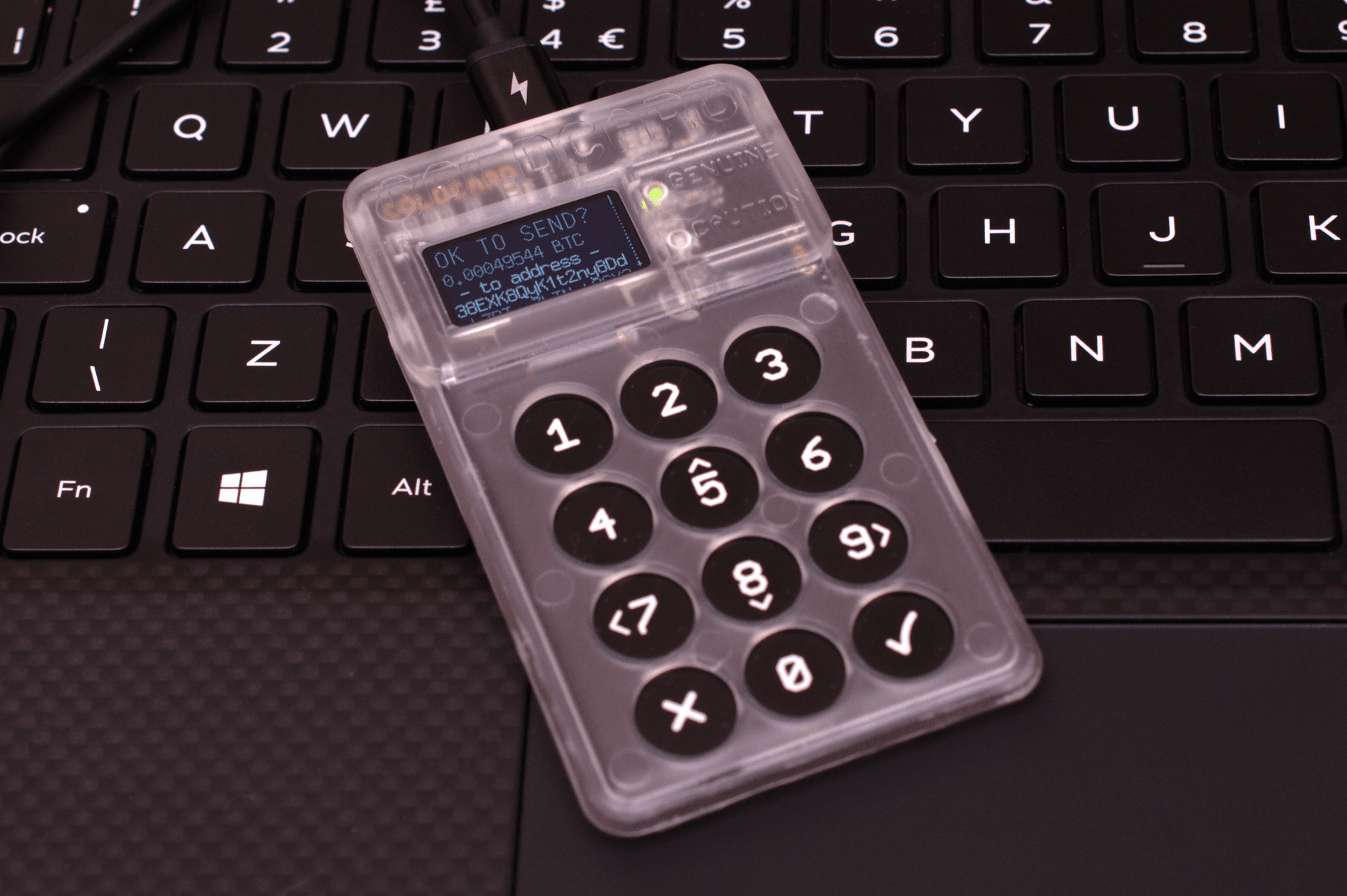
Bitcoin-only editions may remove applications and code for Ethereum, Solana, XRP, token standards, NFT operations and multi-chain contract signing. Devices such as COLDCARD are designed only around Bitcoin workflows. BitBox and Trezor offer Bitcoin-only editions or firmware options on selected models, while some other manufacturers provide switchable Bitcoin-only builds.
The security value comes from refusing work the device was never intended to perform. A long-term Bitcoin signer does not need to parse an unfamiliar token approval or bridge transaction merely because the manufacturer can support it.
A narrower codebase can also make independent review more tractable. Open-source and reproducible builds provide useful evidence, but they remain separate questions from coin support. A closed Bitcoin-only wallet is not automatically more inspectable than an open multi-coin wallet.
Recent COLDCARD events are a concrete reminder that narrower scope is not immunity. On July 30, 2026, Coinkite disclosed a seed-generation entropy flaw affecting several COLDCARD firmware lines. Coinkite says fixed firmware is now available, but updating does not repair a seed generated on affected firmware; affected users generally need to generate a new seed on fixed firmware and migrate funds unless the advisory’s specific independent-entropy conditions apply. Anyone evaluating or already using a COLDCARD should verify the model, firmware version and seed-generation history against the current advisory before treating it as a safe default.
Multi-coin support changes the signer’s job
A multi-coin wallet may need to understand different address formats, derivation paths, transaction models, smart contracts, staking operations and third-party application interfaces. The practical benefit is one maintained hardware platform for a portfolio. The practical cost is more code and more ways for a screen to receive information the owner does not understand.
The largest risk is often behavioural rather than theoretical. A device purchased for long-term savings begins signing token approvals, NFT mints and unfamiliar dApp calls because it can. The same recovery seed then protects the family vault and absorbs daily application risk.
That is not an unavoidable property of multi-coin hardware. It is a wallet-design failure. A multi-asset investor can use one hardware wallet for long-term holdings and a separate low-value seed for active contracts.
The strongest case for a Bitcoin-only hardware wallet
- You hold Bitcoin only and expect that to remain true.
- The wallet is long-term savings rather than an operating account.
- You are willing to use a watch-only coordinator and understand PSBTs.
- You value compatibility with established Bitcoin wallet software.
- You want the signer to refuse non-Bitcoin transactions.
- You can maintain a clear recovery and inheritance plan.
For this user, extra chain support is not useful optionality. It is dormant complexity. A purpose-built Bitcoin hardware wallet such as Blockstream Jade or SeedSigner—or a Bitcoin-only edition of a broader device—can make the boundary explicit. COLDCARD should be evaluated separately against Coinkite’s current security advisory and the firmware and seed history of the exact device.
Brand choice still matters. Compare the screen, secure-element design, firmware transparency, coordinator compatibility, multisig support, QR or microSD workflow and recovery process. “Bitcoin-only” does not make every device equivalent.
The strongest case for a multi-coin hardware wallet
- You genuinely hold several assets that deserve hardware-backed custody.
- You can verify each chain’s address and transaction format.
- You prefer one maintained recovery process over several ad hoc wallets.
- You will keep experimental dApps on a separate seed or low-value device.
- The manufacturer supports the exact networks and wallet integrations you need.
- A larger trusted screen can explain the transactions you expect to sign.
A multi-coin wallet may reduce operational errors when the alternative is scattering backups across unfamiliar tools. But “supports thousands of assets” is not itself a security feature. Verify the exact asset, network, wallet application and transaction type before buying.
Features to compare beyond coin support
Trusted display
The device should display the destination, amount and available transaction details independently of the computer or phone. Screen size matters when long addresses or complex transactions require repeated scrolling.
Firmware transparency and updates
Check whether the firmware is open source, whether builds can be reproduced, how updates are signed and whether a Bitcoin-only edition is maintained separately rather than treated as an afterthought.
Bitcoin wallet compatibility
For Bitcoin, review support for PSBTs, watch-only wallets, multisig coordinators, descriptor backups, Taproot and the desktop or mobile software you intend to use. A device can support Bitcoin while fitting poorly into the workflow you actually need.
Transport and connectivity
USB, Bluetooth, QR code and microSD are transport choices, not automatic safety rankings. Air-gapped transfer can remove a live connection while still importing malicious or misleading transaction data. The screen and verification process remain decisive.
Recovery and inheritance
Confirm the backup standard, passphrase behaviour, multisig documentation and cross-device recovery options. A focused signer with an unreadable backup is worse than a well-maintained multi-coin wallet.
One device can run different firmware; one seed still links the risk
Some vendors let buyers choose Bitcoin-only or universal firmware. Switching later may require wiping, reinstalling or restoring the device. The exact consequences are vendor-specific, so verify the backup and read current documentation before changing editions.
More importantly, different apps or accounts do not automatically create independent security domains when they derive from the same recovery seed. A compromise of the seed can expose every supported asset.
Separate accounts and BIP-39 passphrases can change exposure, but they add recovery complexity. The clearest separation between long-term Bitcoin, multi-chain savings and active dApps is separate seeds with separately documented backups.
Should you use more than one hardware wallet?
Owning two devices does not automatically reduce risk. Two devices restored from the same seed are replaceable signers for one wallet; they do not create independent custody domains. Two separately generated seeds can isolate failures, but they also create two recovery systems to protect.
Useful reasons for separate wallets include:
- Bitcoin savings separated from multi-chain holdings;
- long-term savings separated from dApps;
- personal assets separated from business or shared funds;
- a tested spare device for recovery without keeping it loaded with the same seed.
Do not multiply wallets merely to feel diversified. Each additional seed, passphrase and descriptor is another fact that must remain accurate years later.
Does a Bitcoin-only wallet support Lightning?
A hardware wallet can protect the on-chain Bitcoin keys used to fund or recover certain Lightning setups, but Lightning channels are normally operated through specialised online software with different availability and backup requirements. Do not assume that buying a Bitcoin-only signer turns it into a complete Lightning wallet.
Check the exact Lightning application and recovery model. Long-term cold storage and continuously available Lightning liquidity are different jobs.
Decision table
| Your situation | Better default | Reason |
|---|---|---|
| Bitcoin savings with rare spending | Bitcoin-only | Narrow and deliberate signing workflow |
| Bitcoin plus several major long-term assets | Multi-coin | One maintained custody system may reduce errors |
| Active DeFi plus long-term savings | Separate seeds or devices | Compatibility should not collapse risk boundaries |
| Bitcoin multisig | Bitcoin-focused signer with strong coordinator support | Descriptors, PSBTs and interoperability matter more than asset count |
| Unsure what you may buy later | Do not overpay for hypothetical support | Future optionality is not present security |
Final verdict
If the wallet’s only job is to protect Bitcoin for years, Bitcoin-only firmware is the cleaner default. Its value is not ideological purity; it is a narrower signing job, fewer irrelevant parsers and a clearer operational boundary.
If several assets materially belong in the custody plan, a multi-coin signer can be the safer practical system—provided the owner verifies each network and does not use the savings seed as a universal dApp identity.
Fewer features are useful when they enforce a job you have already chosen. Multi-coin support is rational when it replaces real fragmentation, not when it turns the family vault into the wallet that clicks everything.
Compare current devices in Best Hardware Wallets, review Air-Gapped Hardware Wallets, and use the beginner hardware-wallet shortlist when setup simplicity matters.